
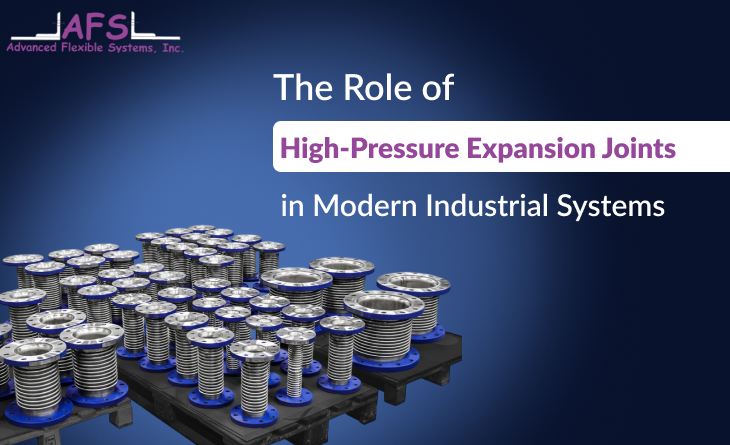
There is a high demand for high-pressure joints in the modern industrial systems due to the presence of constant pressure, temperature and movement. These specialised Joints are designed to absorb the mechanical forces that are created through thermal expansion, vibration and misalignment of piping and duct systems. When there is absence of High Pressure Expansion Joints in the piping system operating under extreme pressure, it will increase risk of equipment failure, leakage and unplanned downtime. These joints are designed for working under intense and constant internal pressure. They are used in industries such as power generation, chemical processing, oil and gas, and petrochemicals.
Key Benefits
High-pressure expansion joints play a crucial role in saving systems from failing. They do this by absorbing movement instead of transferring that movement to hard components of the system. Some of the key benefits of using high-pressure expansion joints in modern industrial applications are as follows
- Stress absorption from temperature changes during thermal expansion or contraction.
- Isolating vibrations to safeguard sensitive equipment.
- Reduction of fatigue leading to increased longevity of systemI
- Minimising leaks in pressurised environments.
Role of High Temperature Composite Materials
- HTCM expansion joints are designed for excellent thermal resistance.
- HTCM expansion joints have high-pressure tolerance.
- HTCM expansion joints are resistant to corrosive chemicals.
- HTCM expansion joints are lightweight in comparison to metal expansion joints
Due to these unique characteristics, HTCM expansion joints are ideally suited for use in industrial heating and exhaust systems, such as flue gas ducting and industrial furnace chimneys
The Use of PTFE Expansion Joints in High-Pressure Applications
- Increased resistance to chemical interaction
- Non-stick wetted surfaces
- Better protection against spillage
- Corrosion resistance
Selecting the Right Expansion Joint
There are several factors that need to be considered for selecting the correct material for high-pressure systems. It is important to consider how much movement will occur, what is the expected temperature range and what kind of fluid will be flowing through the system. In addition to these considerations, one should also take into account whether the installation site will have sufficient space around the joints and how easy it will be to maintain the joints after installation.